
Train control

The railway requires ten operators, each controlling a specific section of the railway. The operators are responsible for all train movements in their particular section or ‘box’ as we call them. The ‘boxes’ fulfil the same function as signal boxes on the real railway. Within each ‘box’ the operator is responsible for setting the route, operating the signals and communicating with the next ‘box’ to them. But in additional the operators are also responsible for controlling the trains as well!
Train control is traditional 2 -rail, 14v DC, control of each train being passed from ‘box’ to ‘box’ as they progress along the railway. We are often asked about DCC operation, but for a railway of this size and complexity, it would be almost impossible to operate under a DCC system.
Timetable
The railway runs to a timed sequence, with the full sequence taking two hours to complete, by which time all the stock is back where it started for the sequence to begin again.
It is a very intense timetable. For example, in a typical two hour sequence Kings Cross will see 35 arrivals and 35 departures, not to mention numerous light engine movements, so there is always something happening.
Control panels
There are two main types of control panel on the railway.
The first type of panel replicates the operation of a traditional signal box, where numbered banks of switches replicate the operation of levers to control points and signals. The numbers correspond to points and signals on a track diagram. You can see examples of these types of panels at Hornsey and Werrington.

The second type of panel has a track diagram where the switches for points, signals and power are all built into it. Kings Cross and Doncaster are examples of these types of panels.

All the ‘boxes’ have a number of power controllers, enabling the operators to run multiple trains at once. For example, Doncaster has four controllers, allowing four trains to be controlled simultaneously!
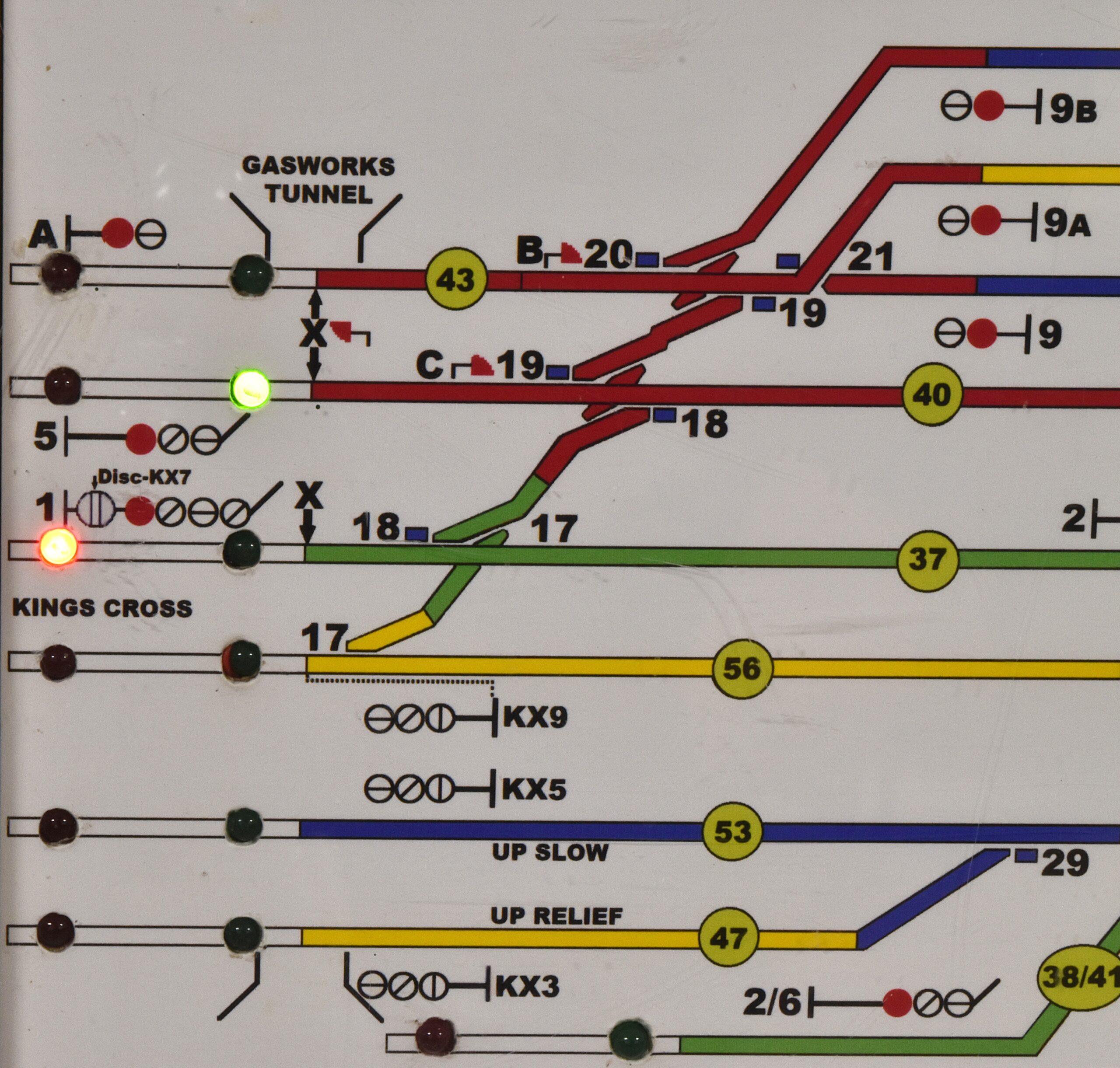
Another key component of each control panel or ‘box’ are the block instruments used to communicate with adjacent ‘boxes’. There are two main types of block instrument. At the northern end of the railway, the ‘boxes’ at Retford, Doncaster and Leeds have traditional block instruments with needle indicators. At the southern end, ‘boxes’ have the block display built into the control panels or track diagrams. How the block instruments work, is described in the next section.
There are ten ‘boxes’ in total. These are:
Kings Cross
Ferme Park
Hornsey
Hitchin
Werrington Junction
Retford
Retford Yard
Doncaster
Decoy Yard
Leeds
Absolute block working
The first thing that will strike you when you visit the railway, isn’t necessarily the railway itself, but the noise. There is an almost continuous ringing of bells that at first appear to make no sense. However, this is the sound of the operators ‘talking’ to each other to ensure the safe passage of trains.
For over 100 years, the real railway used bells such as these along with block instruments to safely regulate the passage of trains. The system we use is called ‘Absolute Block’ and simply means that only one train is allowed on any ‘block’ or section of track at any time.
Our railway has ten block sections. These are the ‘boxes’ mentioned earlier.
The easiest way to explain how the absolute block system works is to demonstrate it, so we will join the operator in Doncaster ‘box’.
In Doncaster there are four block instruments. Two cover the lines to Leeds and two cover the lines to Retford. For this example, we’ll be concentrating on the block between Doncaster and Retford.
Each block instrument has three positions; normal, line clear and train on line. The block instrument gives a visual indication to the operator as to whether there is a train ‘in section’. In some ‘boxes’ this indication is given by the use of green and red lights on the panel itself.
The normal position for a block instrument is to show ‘Normal’. This means that there is no train on that section of track.

Tappers
There are various designs of railway tappers
used to send bell codes. These are a pair used in Kings Cross. 
Most of those on the railway resemble telegraph tappers, with some reputedly recycled from Lancaster Bombers.
In our example, we have an express train that is going south towards Retford (up line), so we need to know if we can safely let the train out of the Doncaster block section that we control and into the next block section that the Retford operator controls. To do this we need to communicate with the operator at Retford by pressing the Retford tapper once to ‘call attention’. This rings a bell in the Retford ‘box’. The Retford operator responds with one bell to say he is ready for our message.
Each category of train has its own bell code, so to ask the Retford operator if the line is clear for an express passenger train wanting to enter their block section, we press the tapper four times. Once Retford are in a position to safely accept the train into their block section, they will repeat the bell code back to us and set their block instrument to line clear. This will be duplicated on our block instrument.
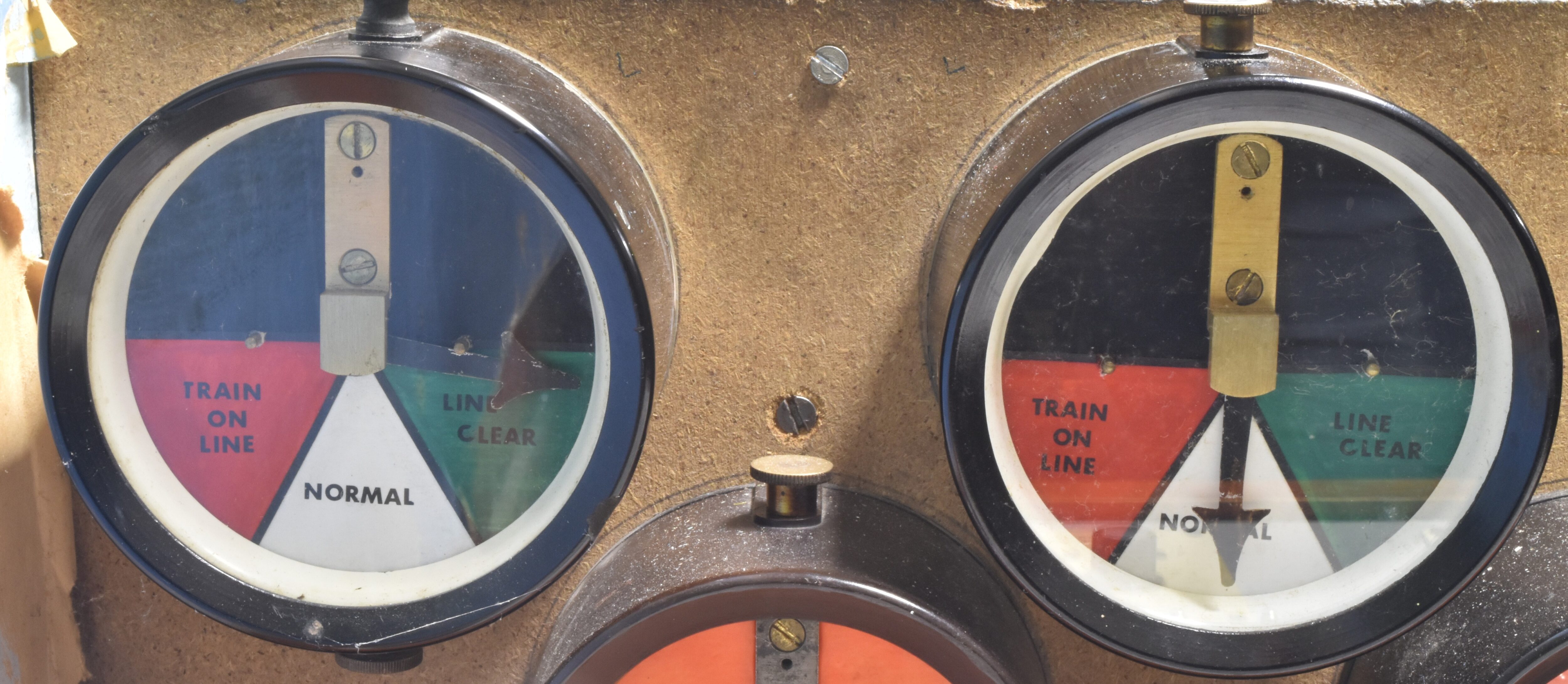
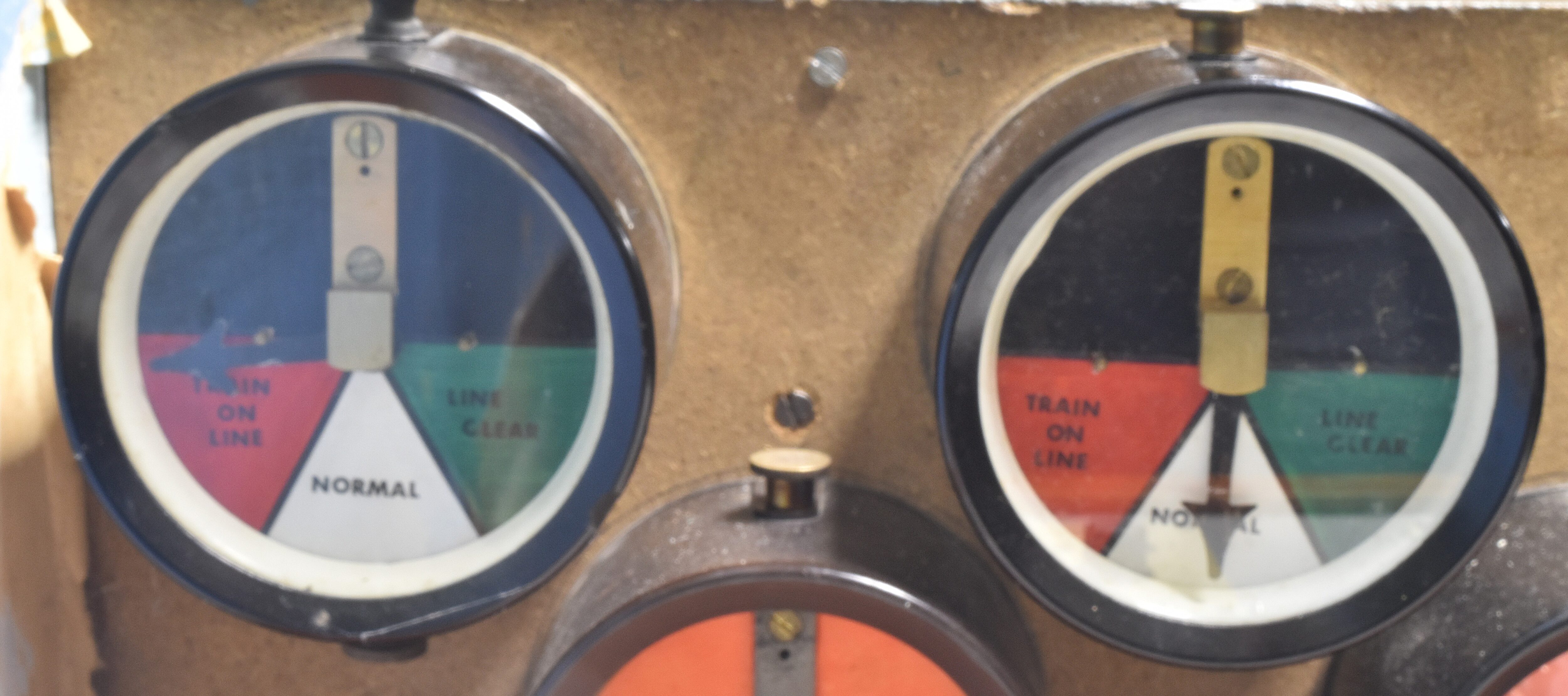
We can then pull off the starter signal and allow the train on its way. As the train enters the Retford block section we press the tapper twice to inform Reford the train is ‘on line’. Retford will repeat the message and place their block instrument to ‘Train on line’.
Once the train is in Retford’s block section and the Retford operator is confident the train is complete they can then send a 2-1 bell code to Doncaster advising the train is ‘out of [Doncaster] section’ and the block instrument will be returned to ‘normal’. The sequence can then start again for the next train.
Bell codes
Here are some of the bell codes you will hear during your visit. The bell codes we used are based on those in use on British Railways in the 1960s, although with some local variations to suit our needs. The trains in brackets are the types of trains we run under each bell code.
1 call attention
2 train on line
2-1 train out of section
2-5 train withdrawn
1-3 is the line clear for suburban passenger train [Moorgate suburban services to Hitchin]
1-3-1 is line clear for non-passenger carrying coaching stock [parcels trains]
1-4 is line clear for local freight train [local freight train working between Doncaster Decoy and Retford yards]
2-2-1 is line clear for empty coaching stock train [Kings Cross to Hornsey carriage sidings]
2-3 is line clear for light engine or light engines coupled
3-1 is line clear for ordinary passenger train [local passenger service between Leeds, Doncaster and Retford]
3-1-1 is line clear for Express freight train [express freight train ‘the Scotch Goods’]
3-2 is line clear for express freight, livestock, perishable or ballast train, not fitted with the automatic brake? [unfitted freight trains]
3-2-5 is line clear for car carrier train
4 is line clear for express passenger trains [express passenger trains, sleeper service]
4-1 is line clear for mineral or empty wagon train? [coal train]
5 is line clear for fully fitted fish train